
In Brief

The Need: Assess the level of design system compliance and determine a way to improve compliance.
Skills In This Case Study:
- Experience Design
- Education Design
- System Compliance Design
The Result: A series of actions from quick wins to long-term plans, complete with roadmap, additional investigation, and contribution models.
Refined Requirements
To better serve the initial ask of debt assessment and improved compliance, a round of deep fact-finding took place.
That yielded a series of refined requirements:
- Develop criteria for deviation types
- Develop high level recommendations for improved compliance
- Identify debt sources and causes

Research
With early fact-finding and refinement complete and based on prior experiences in related fields, the following hypotheses were formed
- Many deviations will use same or similar code
- The deviations will have multiple sources
- Single source debts should be easier to ID and resolve
- Single incidence deviations will be hard to spot and resolve
- Deviations may indicate decisions to innovate and refactor debts later
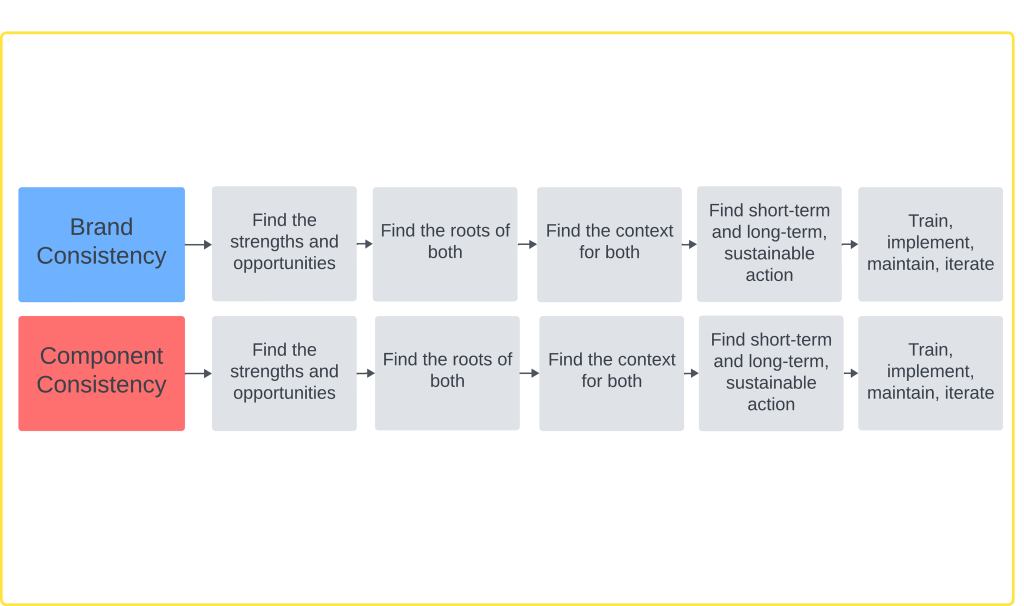
The Audit
The audit itself would cover the quality assurance version of the platform as that was the most stable and consistent sampling of states, features, and tests.
The audit reviewed visual and code consistency in this environment.

Audit Results
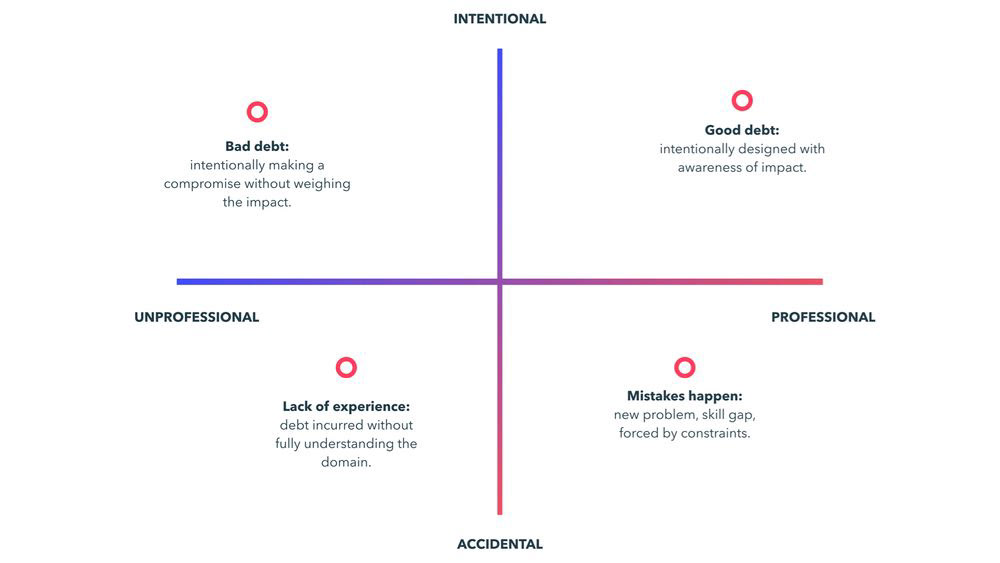
The audit revealed a great deal of technical debt but most importantly, the following:
- Code was often sourced from outside of documentation
- Documentation was sometimes unclear
- Technical debt could be resolved using information from the audit
- Single source debts are easy to identify per hypothesis
Synthesis
Taking stock of the results and combining them with deep dives into the development history of Dealer Navigator, a series of conclusions were reached. Those conclusions would help in formulation of action plans and roadmap changes.
- Intentional debts can be reduced by improved planning and a contribution model that allows designers to create based on forecasted needs.
- Unintentional or accidental debts can be reduced through reducing, centralizing, or standardizing documentation.
- Consistent deviations indicate a single code deviation and can be easily resolved
- Inconsistent deviations/arbitrary uniqueness may be more difficult to resolve but can be reduced through better documentation, training, and contribution

Taking Action: Quick Wins and Long-Term Success
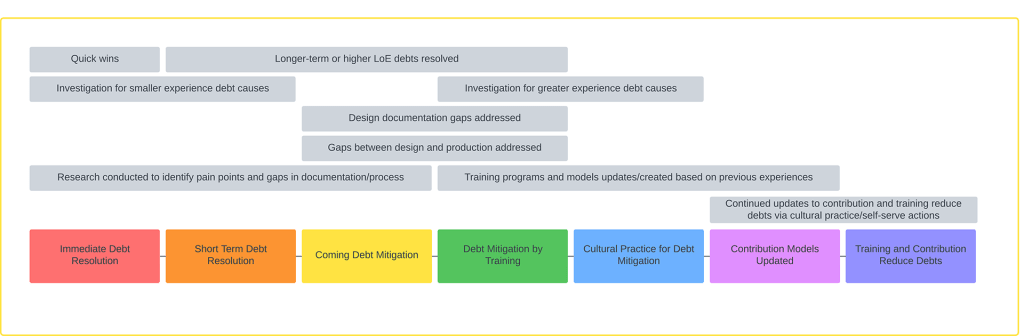
To resolve as much debt as possible as soon as possible, this general plan was assembled:
- Address consistent, single code deviations first
- Address the inconsistent deviations that occur multiple times next
- Finally, look into the deviations that occur just once
For long-term UX quality, the existing roadmap was modified with focus on:
- Seeking out detailed pain points and suggestions from designers and engineers
- Reducing uncertainty by closing gaps in documentation
- Training and “train the trainer” efforts to build a compliance culture
- Self-serve contribution that encourages ownership of design documentation
 Kit Young Creates